Pulse

A silent composition where RGB lasers, prisms, and DMX code perform rhythm as light rather than sound.

Context
NYU Shanghai · Interactive Media Arts
Focus
Light installation · Computational choreography
Stack
Arduino + Conceptinetics DMX · RGB laser bars · Acrylic prisms
Year
2025

Project

Pulse asks how performance changes when rhythm is written with photons. Five columns hold fifteen acrylic prisms that refract RGB laser beams into mirrored paths, forming a visual bianzhong that plays without sound.

Every beam angle, color transition, and strobe pulse is scripted through Arduino-driven DMX segments so light behaves like a disciplined percussion score.

Watch

Pulse performing the refracted light score

A two-minute loop where RGB beams strike prisms like bells—recorded straight from the EB115 installation.

Concept & Framework

The piece translates the layered structure of the Chinese bianzhong into optics. Instead of bronze bells, RGB laser heads are the notes—struck digitally, refracted physically, and perceived as rhythm through light.

References to James Turrell and László Moholy-Nagy guided the core rule: light is not illumination but the content itself. Paths, not lit surfaces, carry the narrative.

  • Focus on refracted trajectories rather than projections.
  • Build rhythm from intersecting beams, mirrored geometry, and paced strobes.
  • Keep the experience meditative—structured, precise, and intentionally silent.
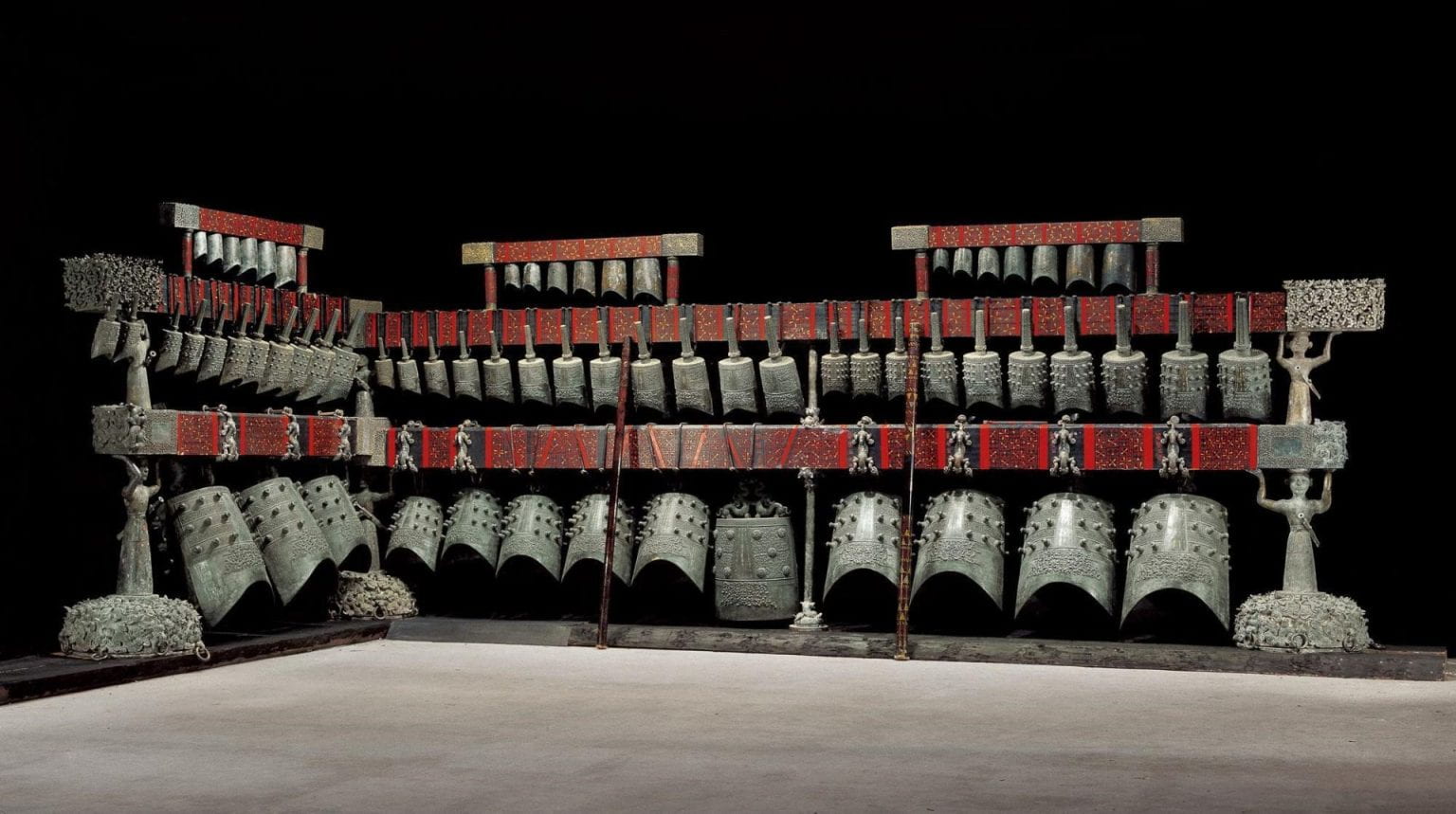
Ancient Chinese bianzhong bells at Hubei Provincial Museum

Instrument of Light

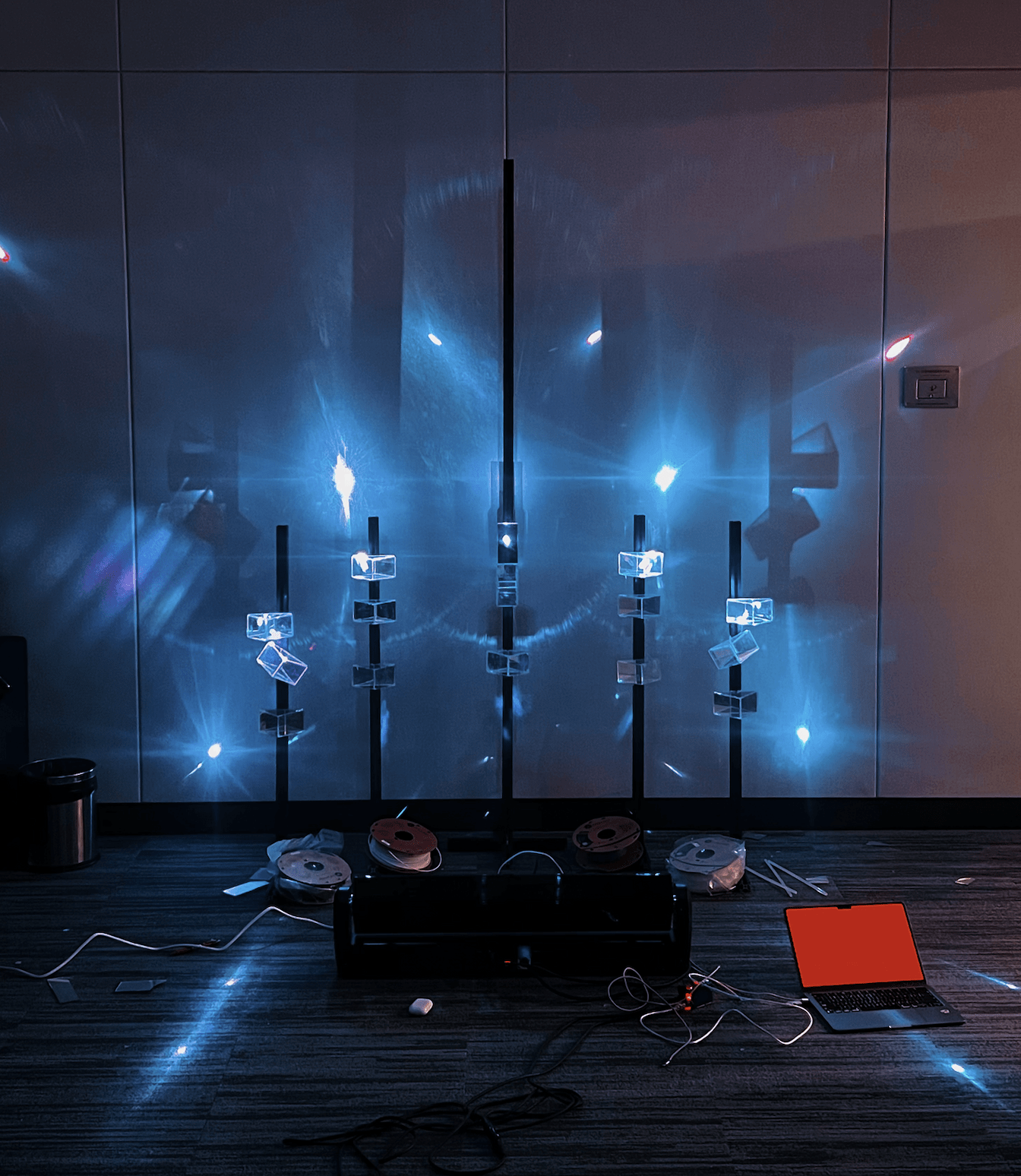
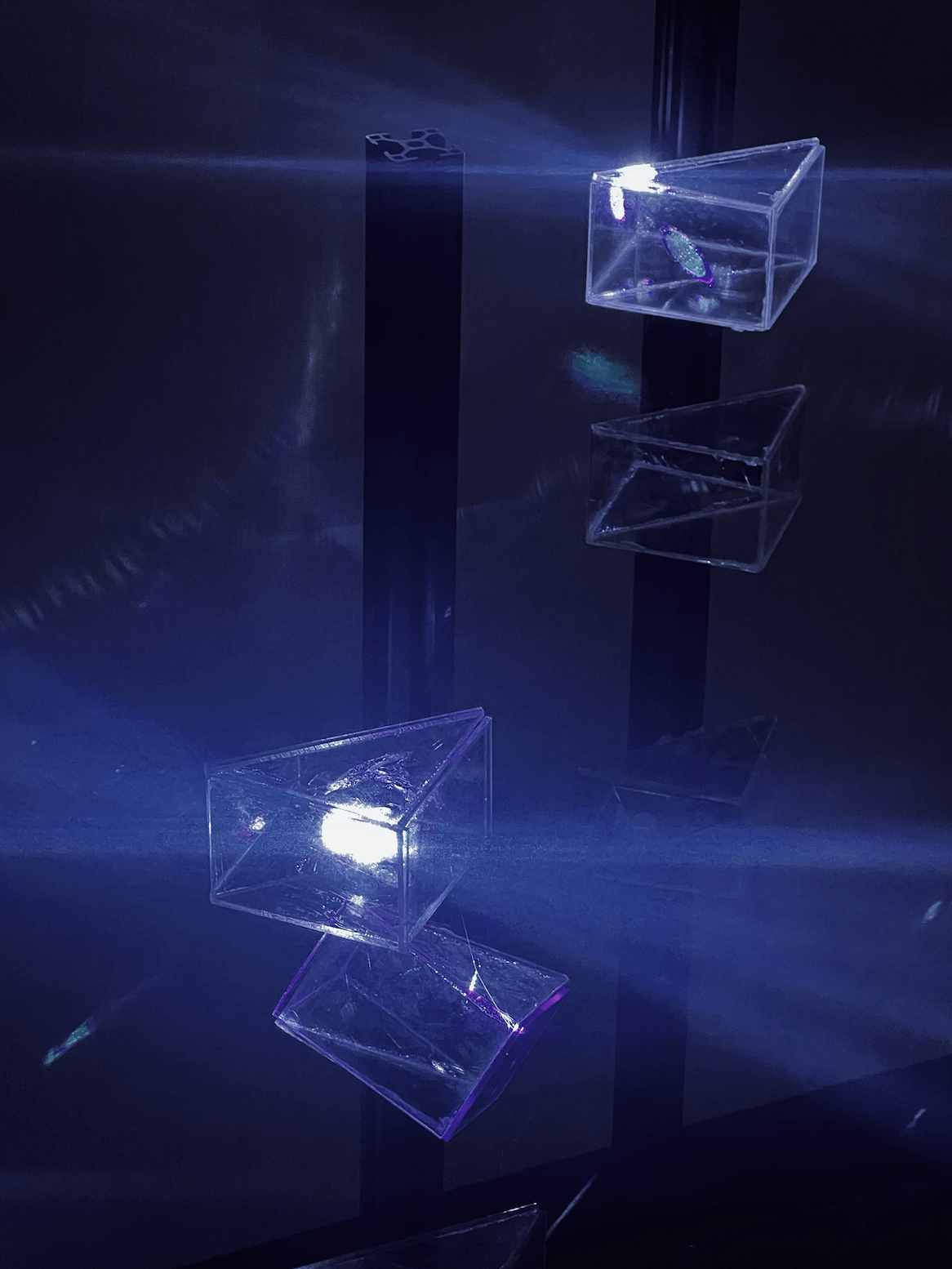
Five upright pillars form a semicircular arc, with the central column doubled in height to anchor the ensemble. Three acrylic triangular prisms sit on each column, pre-angled to split beams with minimal loss.

  • RGB heads act as discrete voices with dedicated pan/tilt envelopes.
  • Prism stacks fold beams into intersecting planes and staggered depths.
  • Global color schemes alternate cold symmetry and warm counterpoints for spatial contrast.
Pulse installation showing five columns and layered beams

DMX Score

The Arduino-controlled Conceptinetics DMX stack runs Pulse as a looping two-segment score. Segment 1 establishes symmetric scans, accelerating cross-patterns, and strobe accents; Segment 2 stretches into long sweeps, white–blue–red phrases, and timer-based fades before resetting.

Specific cues—43°, 73°, 81°, and 91°—trigger micro-oscillations that make beams appear to strike prisms, rebound, and settle, constructing rhythm through motion envelopes instead of tempo.

Final Visual Language

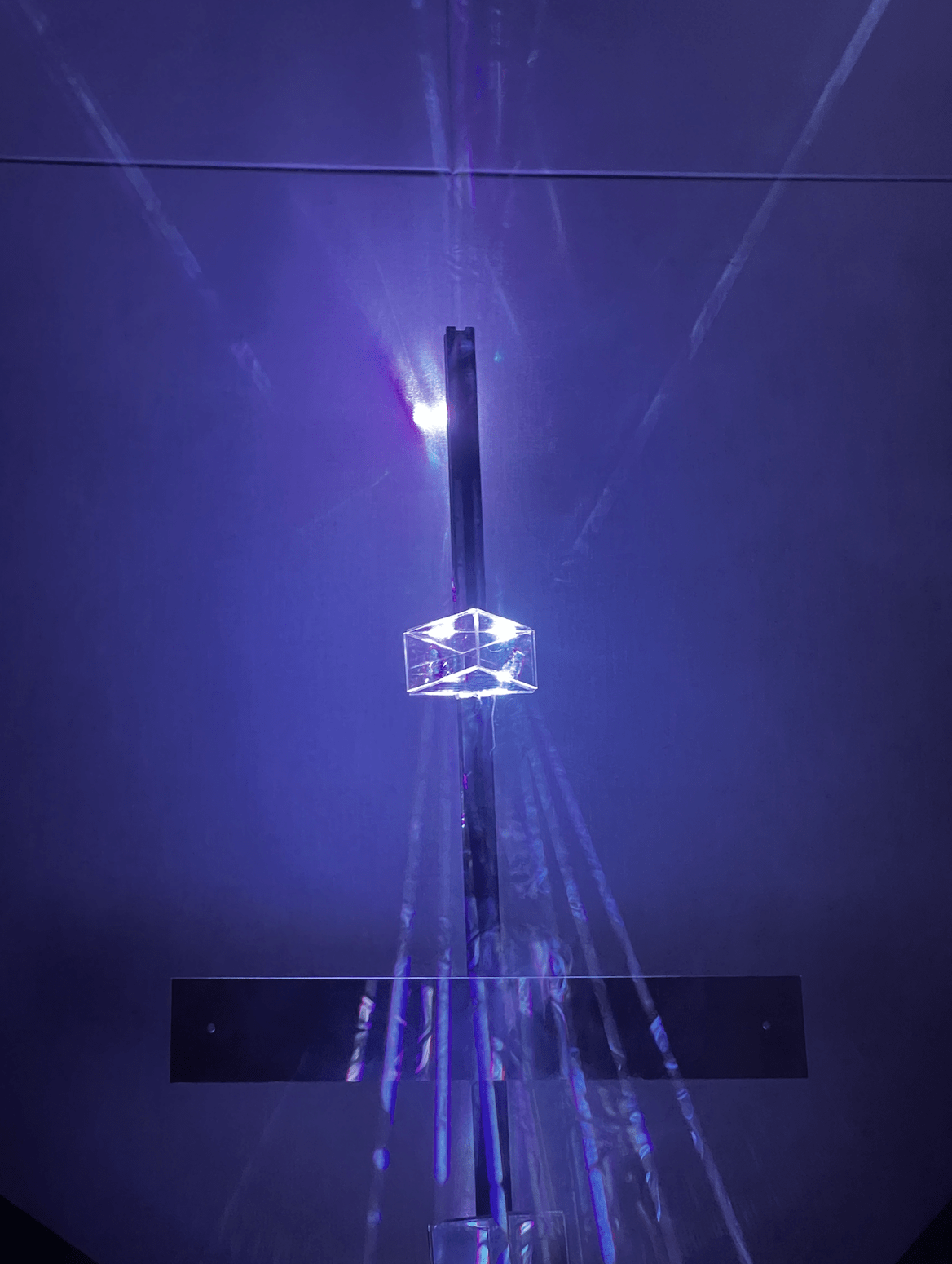
The hero frame anchors the narrative with the most balanced view of the prisms, central pillar, and mirrored beams. Supporting captures highlight how the palette stretches across the score—from expanded blue chords to late-stage warm reflections.

Together, these stills show the installation’s full range without ever leaving the disciplined, bell-like rhythm that defines Pulse.

Primary Pulse frame with central pillar and intersecting beams
Pulse variation capture with extended blue chords
Pulse variation capture showing warm reflections

Presentation in EB115

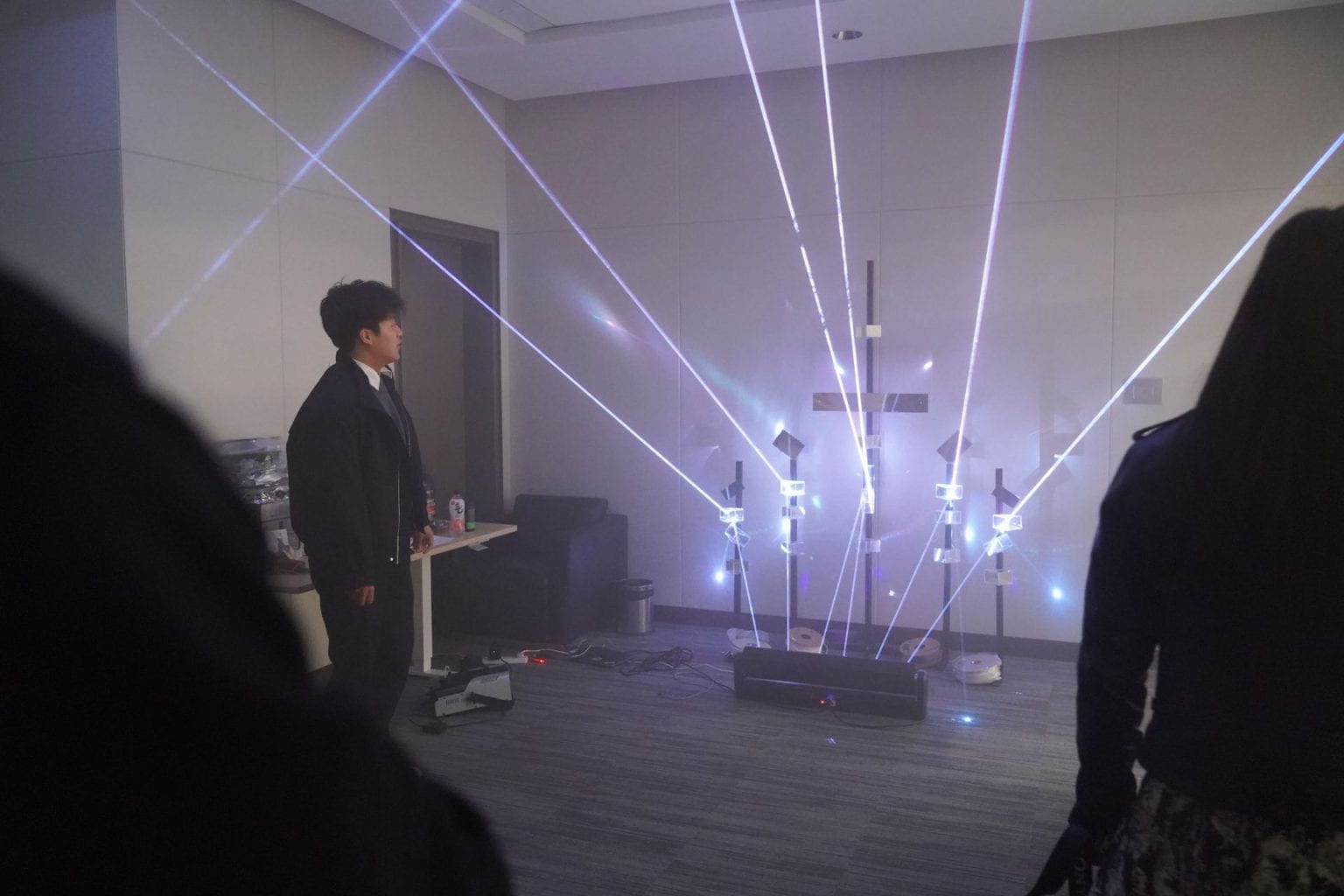
EB115’s enclosed ceiling trapped haze, letting refractions stay crisp as the room fell to darkness. Audience members moved through the arc to read layered intersections while the double-height column held the visual center.

Feedback from Professor Eric and Yanny emphasized staggering activations and keeping reflections tightly choreographed—notes that align with the project’s focus on intentional, bell-like rhythm.

Audience observing the Pulse installation during presentation

Takeaways

Pulse demonstrates that rhythm can be engineered from optics and control code. Writing the DMX logic before fabrication meant the “instrument” was defined by beam paths first, then by physical structure.

  • Precision matters—one degree of prism shift can collapse the choreography.
  • Sequential activations and stricter reflection constraints will sharpen future iterations.
  • Most importantly, light itself became the content, proving performance can read as music even in silence.